🆕 Never Post! Mailbag #13: Tinky Tiny's Post-Party Palooza
We respond to your questions and comments!
–
☎️ Call us at 651 615 5007 to leave a voice mail
🗣️ Drop us a voice note via airtable
📧 Email us at theneverpost at gmail dot com
🌐 Leave a comment at neverpo.st
–
The Crystal Shelf!
Cool Things!
- The Mobile Phone Museum
- Low Tech Magazine
- SpaceHey.com
- The Eierschalensollbruchstellenverursacher!
–
Graffiti

–
Never Post's producers are Audrey Evans, Georgia Hampton and The Mysterious Dr. Firstname Lastname. Our contributing producer is Meghal Janardan. Our senior producer is Hans Buetow. Our executive producer is Jason Oberholtzer. The show's host is Mike Rugnetta.
Never Post is a production of Charts & Leisure, and is distributed by Radiotopia.
Episode Transcript
TX Autogenerated by Transistor
Friends, hello. And welcome to Never Post's summer twenty twenty six mailbag. So nice to see all of you. Where are you spending summer?
Georgia Hampton:At the bottom of the ocean.
Jason Oberholtzer:That's all royalty free by the way.
Mike Rugnetta:You can have that. In which we respond to listener emails, comments, voicemails, and voice messages about our segments. Do you have thoughts? Do you think? Have you considered or perhaps pondered?
Mike Rugnetta:Send those thoughts, thinks, considerations, and ponderings to us here at Never Post, and perhaps we will make hay of them. No wondering, though. You can keep the wonders to yourself. I'm your host, Mike Renetta. Joining me today paired with their Slurpee flavor.
Mike Rugnetta:Oh.
Jason Oberholtzer:Okay.
Hans Buetow:R.
Mike Rugnetta:Never Post senior producer Hans Buto pineapple whip.
Hans Buetow:Because you said whip.
Mike Rugnetta:R. Georgia, you put that tongue back in your mouth. Pineapple pineapple whip slaps.
Georgia Hampton:Whip? Like a is it like cream?
Mike Rugnetta:I don't it's like it's like sort of creamy, but I don't think it has any dairy in it.
Hans Buetow:I mean, I've never had one, but it sounds delicious and a little bit like me.
Hans Buetow:So it's a it's a bit of me.
Mike Rugnetta:Yeah. I just I wanna make it clear that I this is not like I'm not assuming this is your favorite. Like, there's no what I am. There's no question involved here. Yeah.
Mike Rugnetta:I am I'm making a definitive judgment here.
Hans Buetow:I'm a symbol of welcome mixed into a pleasant refreshing drink.
Jason Oberholtzer:Yes. This is your Enneagram.
Mike Rugnetta:Yeah. Exactly. And, Hans, you are some mysterious percentage of nondairy creamer. Yeah.
Hans Buetow:You're not the first to say it.
Mike Rugnetta:Never Post producer Georgia Hampton, Mountain Dew Baja Blast. Yeah.
Hans Buetow:Heavy as the head. This is
Hans Buetow:a huge honor. Why? Can I confess something? I've never had a Mountain Dew Baja Blast.
Mike Rugnetta:We know.
Jason Oberholtzer:Yeah. That's why you're the whip boy. Wow.
Hans Buetow:I'll just lay on the floor for the
Hans Buetow:rest of
Hans Buetow:the guests.
Mike Rugnetta:Should we should we pause for a second so
Hans Buetow:you could
Mike Rugnetta:just take that in?
Hans Buetow:I we we let's pause for an hour
Hans Buetow:so
Hans Buetow:can
Hans Buetow:go get one.
Georgia Hampton:I was about to say
Hans Buetow:Be a
Hans Buetow:cool kid.
Georgia Hampton:Sure Taco Bell is open right now. Yeah.
Mike Rugnetta:Actually, this week in particular, they might not be.
Georgia Hampton:Oh, actually,
Georgia Hampton:there's there's taking a lot of heat right now.
Hans Buetow:But you know what's always been safe is the Baja blast. Yeah. This
Georgia Hampton:is a huge honor. Thank you, Mike.
Mike Rugnetta:I was gonna say, the elite flavor. It really is. The PT Cruiser, really, of assortment flavors.
Georgia Hampton:She's an icon. She's a legend, and she is the moment.
Mike Rugnetta:And Never Post executive producer Jason Oberholzer, Pina Colada.
Jason Oberholtzer:Hey. I like this. This is classy answer.
Hans Buetow:Taking a trip to
Georgia Hampton:the islands.
Jason Oberholtzer:Yeah. Right? My heart was set on Blue Raspberry because I like like an uncanny Sure. Ungodly creation of man. But pina colada is it shows that you have a difference for me I don't hold for myself.
Jason Oberholtzer:And I like that.
Hans Buetow:So I'm the working man's Jason. Is that what you're saying?
Jason Oberholtzer:Yeah. What is a pina colada
Hans Buetow:if not a dairy creamer and pineapple? Well,
Hans Buetow:think famously it's coconut.
Mike Rugnetta:Fair. Pina okay. Now, let's go through all the Slurpee flavors and rank them by social class.
Hans Buetow:Right. What do we, three of us, name mister Rugnetta, our esteemed host?
Mike Rugnetta:Feel free to Google list of Slurpee flavors. It's a delight.
Georgia Hampton:Because I was thinking we'd have, like, a Coca Cola or, like, a cherry
Hans Buetow:Right.
Mike Rugnetta:I mean,
Jason Oberholtzer:don't none of us
Mike Rugnetta:think any of us is a Coke Slurpee.
Hans Buetow:No. Mountain Dew confetti chill?
Mike Rugnetta:I don't even know what that
Hans Buetow:is. Oh.
Jason Oberholtzer:Has matcha made its way to the Slurpee? Yeah.
Mike Rugnetta:A heinous thought.
Georgia Hampton:Dubai chocolate.
Hans Buetow:Oh, No.
Jason Oberholtzer:Yeah. Sorry.
Hans Buetow:Mike might be brisk blood orange.
Jason Oberholtzer:Oh, hell yeah.
Hans Buetow:That sounds really good. That's
Georgia Hampton:Aw Come on.
Jason Oberholtzer:I think
Jason Oberholtzer:that's it. He sort of like a Cormac McCarthy that gets things done.
Mike Rugnetta:Sure. I'll take it. Sounds murderous, but I'll take it. Yeah. Alright.
Mike Rugnetta:Let's ponder some orbs. I mean, listener comments. Okay. We have something to start with. I don't know what it is.
Mike Rugnetta:This is a big mystery to me.
Speaker 7:Hi. This is Asa from Denmark. And I have a question about a phrase I've heard probably on a weekly basis for the past decade or so that I'm really curious about in terms of like where it originated.
Hans Buetow:So much drama.
Speaker 7:And the phrase is
Jason Oberholtzer:This is how we get cancelled.
Speaker 7:Or wherever you listen to podcasts.
Mike Rugnetta:I have a before we answer, ask this question. I have a question for the group. Yeah. Is or wherever you listen to podcasts our don't forget to like, comment, and subscribe.
Jason Oberholtzer:I will. Yes. Probably.
Georgia Hampton:Yeah. Yes. Definitely.
Mike Rugnetta:So, Asta, the answer to this is podcasts are distributed via a decentralized technology called RSS for really simple syndication. That means that there is no one place where you go to get your podcasts. It is not like YouTube. We do not upload our podcasts to the same spot. And in fact, many of the places that podcasters use to upload podcasts are not places where you go to listen to them.
Mike Rugnetta:Yep. What those hosts do is they syndicate the audio that you upload to many different services called podcatchers, like Spotify, Apple Podcasts, Pocketcasts, Overcast, a bunch of others, Podcast Addict. But the reason people say or wherever you get your podcasts is because there's so many podcatchers that one, it would be irritating to list them all out by name. And two, there are probably more than we know about. Oh, for sure.
Mike Rugnetta:There are people who are listening to this show on a podcatcher where we would be like, what the hell is that?
Hans Buetow:It's a seashell that they Yeah. Yeah. Like, you know,
Mike Rugnetta:you could, in theory, make a podcatcher out of like a raspberry pie. That's just yours in your apartment, and that's where you get your podcasts.
Jason Oberholtzer:Raspberry pie slushie.
Mike Rugnetta:Now hold on.
Hans Buetow:So thanks for writing in from Denmark. Amazing. To clarify something you've been hearing for ten years. Thanks for asking us.
Jason Oberholtzer:Yeah. But I do also wonder who was the first person who broke the seal on that efficient way to nod to all the podcasters.
Mike Rugnetta:I imagine it was the first podcast host, Sarah Koenig.
Jason Oberholtzer:Not the second one, Conan O'Brien.
Mike Rugnetta:Certainly not the third Amy Poehler. The father, the son, and the
Hans Buetow:holy ghost.
Jason Oberholtzer:Oh, boy.
Georgia Hampton:We got some very interesting submissions about my episode about how no one wants to hard launch their man, in which I explored this very numerous cynical mindset around women posting their boyfriends on social media. And the prediction there being that this guy is always gonna disappoint you, he's gonna ruin your life, and you might as well just learn that as soon as you can, not post this person ever, and kind of live in that cynicism. And to start us off, Matt Stromageddon.
Speaker 8:As someone who is nonbinary but identified as a man for many years, I still find myself falling into overly masculine tropes. But also there are parts of, like, my my maleness as I find this new world of non binary ness that like I love and I hold onto like the idea of being mushy on social media about your partner. I don't know. I make anniversary and Valentine's Day posts on social media all the time. I think being mushy gushy with my spouse who I've been with for as of this recording almost eleven years, I like being kind of a hopeless romantic and mushy gushy.
Speaker 8:And I'm curious about the queer perspective too, which Georgia does mention a little bit, though this is mostly looking at the very straight version of it. But like, I'm curious if, like, men are embarrassed by their boyfriends too. If, you know, non binary people are embarrassed by their boyfriends as well? Like, I'm just curious. And then I love love.
Speaker 8:Right? And this just seems like I guess my bigger question is, like, what happened to that? Why why don't we love love in the same way? Why do we think there's a specific thing that caused this gigantic turning point? Is there hope?
Speaker 8:I guess, ultimately is my question. Is there hope for loving love and being gushy and and cheesy online? Or will there always be this cloud of embarrassment around it? Like, what can we do to rehabilitate that?
Mike Rugnetta:Well, love is weakness, so we just can't we can't put that in public. She's
Mike Rugnetta:not allowed.
Jason Oberholtzer:You came to the wrong place,
Jason Oberholtzer:man.
Hans Buetow:Heck no. Come with me. I'll protect you.
Georgia Hampton:A big reason why I wanted to focus this segment so much on heterosexual women dating men is that I mean, that dynamic of, like, women dating men, I think, as a queer person, like, within queer community, can get kind of waved away as, like, well, obviously, you're dating a man. Like, what do you expect? And the issue I was discussing, I do think, is unique to heterosexual relationships in its specific nature. But I think there's also kind of across the board, you can find this fear that gets sort of crystallized into cynicism of sharing too vulnerably your love for someone else. Slight pitch
Mike Rugnetta:for member content. We were talking about this in the paper report that we just recorded that will be out soon, where Alice Marwick talks about, like, there is no place to go online to share my actual life because doing so feels just too risky. Yeah. Like, there's too many shitheads out there. There's too many people who are gonna read it wrong.
Mike Rugnetta:It just feels like a kind of vulnerability or a kind of danger that I'm not interested in. I wonder if a lot of that is, like, then you kinda you do like a post hoc justification of like, well, that's embarrassing. It's embarrassing to I don't wanna commit too fast. When really what you're just feeling is fear of being seen and of the vulnerability that comes with exactly the thing that Matt describes, like being mushy gushy in public.
Jason Oberholtzer:Say mushy gushy one more time.
Georgia Hampton:And I do think I think looking at this, like, within a queer community, it is its own thing. Like, this question is is coming with so many other contextual elements of, like, queer relationships, you know, in some top down circle, shall we say, is treated as no good and bad and taboo already. So to defend and celebrate your relationship is sort of part of the experience. It's part of the joy of being queer. So I do think it's it's unique.
Georgia Hampton:But I also you know, in the same way that, like, a fuck boy to me is a genderless term. Like, it it exists they're in the walls. They're everywhere. If there is anything that kind of kick started this cynicism, this fear of being too public, I think it's the emergence and intense power that the fuck boy has.
Mike Rugnetta:Mhmm. Mhmm. Oh, I
Georgia Hampton:want all the trappings of a relationship, but I don't want a relationship. I wanna introduce you to my parents, but this isn't a relationship. I'm gonna say I love you, but this isn't a relationship. You know, whatever the case may be. Yeah.
Georgia Hampton:And I think that kind of understandably, can elicit this reaction of like, well, then, I'm not gonna be playing this game at all. Like, I'm gonna beat them at their game.
Jason Oberholtzer:You know, when you create a relationship, when you start or announce relationship in the light of day, you have to end it in the light of day, and when you do it in the dark, you can end it in the dark. It was easier to carry on with your fuckboys, regardless of their gender, entirely alone, and only be mortified by your own actions than it is now when you have to perform some of those actions online. Yeah. We wanna love love too, man. More or less.
Jason Oberholtzer:I I think this is an interesting transition to an email that frequent writer, Ben Sparaji, sent in about, like, when the public nature of putting a man on your brand is actually very, very public. Mhmm. I said a few months ago, I saw a vertical video by professor Neil, who had a story about the cover of his book on Canadian pop culture. He wanted the cover to feature Canadian pop slash rap star, Drake. Okay.
Jason Oberholtzer:Love you had to describe this to me. He's a multi hyphenate. But the publisher was against it. After a bit of back and forth, he asked if they were afraid Drake would be me too'd, and they said, yes. Professor Neil connected this corporate understanding of men generally causing trouble to women's understandings of boyfriends causing trouble.
Jason Oberholtzer:Is this a thing? Yes. Do men just be causing trouble and it's dangerous for your brands to associate with them?
Georgia Hampton:Yes. Yes. Even within straight women community, there is this, well, girl, like, you hit your wagon to a man. Like, what do you expect? That phrase, what do you expect?
Jason Oberholtzer:Mhmm.
Georgia Hampton:And the answer is always, well, I expect him to basically, like, rake me over the coals and ruin my life.
Jason Oberholtzer:We expect him at the very least to be Drake. Yeah.
Mike Rugnetta:Okay. Next up, we got some comments about the episode about Doom, wherein we talked about the history of the development of the famous first person shooter. The reasoning, the reasons that it can run on many different systems, and how it has become a platform for technological and cultural experimentation. We got a couple really good comments. The first that I'm gonna read was left on the website by Ikechukwu Okareke, and they write, Ring Racers is actually a bit more storied.
Mike Rugnetta:And let me tell you listeners, no better way to start a comment.
Mike Rugnetta:No better way to start a comment.
Jason Oberholtzer:You want the comment in the mailbag? Start with that.
Mike Rugnetta:Start this way. As it is a continuation of SRB two kart, a racing conversion mod of the fan game Sonic Roboblast two, which was built on Doom Legacy and has been developed for over twenty five years. I've been looking into the early history of the Sonic fan gaming community. Listeners, halfway through your comment, this is what you do. And there is a lot of interesting interplay between Doom and the then Sonic research scene, which was primarily looking for unreleased demos and cut content where this open source principle for creativity was carried over.
Mike Rugnetta:Woah. I mean, hell yes. I have no additional comments except hell yes, and please write in with more discoveries. And now I know what I'm doing with my Friday night.
Hans Buetow:I think half of our audience just grabbed an electric guitar and just ripped a sick rift, and
Mike Rugnetta:half the audience went,
Hans Buetow:what?
Hans Buetow:You know
Hans Buetow:what? Second second half.
Georgia Hampton:Everyone was like, Sonic, I know him.
Mike Rugnetta:Jed Cole writes in and says, this was so fun and kinda inspiring as an artist listening to this. I personally would read and enjoy a book written by Mike about Doom's uses in art despite knowing that he pronounces tretus that You're gonna
Jason Oberholtzer:commit to this. Yeah. Like, there has to be a reason this happened to you.
Mike Rugnetta:Well, I have no clue what
Mike Rugnetta:it is.
Mike Rugnetta:So you don't know. This is just what it is in your brain. The alternate pronunciations are a different way of saying the second syllable. So I'm just wrong, but I like it.
Jason Oberholtzer:That's how language works.
Mike Rugnetta:Yeah. Jed, thanks for writing in. We also got an email in from J. P. LaBretton, who I think some of you, if you're like real doom heads, might know.
Mike Rugnetta:J. P. LaBretton is actually someone that me and Zazer talked about briefly in our longer interview. It didn't make its way into the final cut of the episode. But J.
Mike Rugnetta:P. Is a game developer and wrote a really well known and kind of beloved blog post called Lessons of Doom, kinda talking about like what it is about Doom from a game design perspective that makes it feel like a great game. And it's a really great read. I highly recommend taking a look at it. We'll put a link to it in the show notes.
Mike Rugnetta:So first things first, JP, it's amazing that you found the episode and listened to it and double amazing that you wrote in. So thanks for the email. I'm gonna read two parts of it because I think that there are things in here that are really fascinating just from like a game design industry perspective. One of the things that JP writes is, until it was mostly choked out by rising triple a production values, And for anybody who doesn't know, triple a games is just like the biggest, most expensive games that you know.
Hans Buetow:That's the part of the segment that you explained.
Mike Rugnetta:Mom my mom won't know that. My mom knows what Doom is.
Georgia Hampton:And I didn't know what that was.
Mike Rugnetta:You're like That was for Georgia. Thank you.
Jason Oberholtzer:Mike's mom does know what s r b two cart is.
Mike Rugnetta:Shit. She was like, well, I mean, some interesting things happened in the then Sonic research scene. Okay. Chopped up by rising triple a production values and publisher abandonment of game mod support in the early mid two thousands, the mod community was this incredible golden age of amateur creativity that only really came back a decade later with Minecraft at all. Yeah.
Mike Rugnetta:I still think we could have something like that again even though the tech landscape and society's overall conception of what a hobby is, and then in parentheses, monetizable, says the devil, has changed a lot since then. Cool.
Hans Buetow:And I
Mike Rugnetta:think that that's like there's a lot to say about these couple sentences, but I think it really gets to one of the things that is so powerful about Doom and the community around it, and the things that are made, and the things that are made with it and the way that it was designed by the people who made and released it, that there is both a norm and a little bit of a barrier to rampant monetization. And that makes it great and also what makes it feel impossible. And that's something that JP goes on to sort of talk a little bit more about in the next part of the email where he writes, Doom and Quake together are, I think, an ideal lens for understanding the evolution of the cultural political economy of game development. Listeners. And more broadly, how capital influences creative labor.
Mike Rugnetta:This is a such an interesting point. CarMax engines brought into focus the idea that game technology, which birthed the GPU market and thus the blueprint of all modern consumer technology development. Woah. Woah. Has always had this capital intensive imperative to put more money on the screen, which is basically like the maybe correct, maybe incorrect received wisdom that what game players want to see is a video game that looks like a movie, essentially.
Mike Rugnetta:Do they actually want that? Big question mark. And with the PS five gen, we're more or less at the end of history of where everything about computing architecture is now about sucking unbelievable amounts of data off storage and into GPU RAM and splatting it on screen maximally random accessibly. And that these gobs or wads, if you will, of data are by necessity the product of immense hierarchies of human labor that I've spent my whole career inside and progressively alienated by. And all the economics of game development are downstream of that bottomless need for, not a fan of this word, but content.
Mike Rugnetta:And maybe deeper critical awareness of that tech determinist imperative that started with Carmack realizing he could do a trick with EGA registers could shine a light on alternatives, all the way up to imagining what game development and amateur creative work would look like in a post capitalist world. A quote, people's history of doom or general talk about creativity and capital intensity that I'd like to do someday. Hell, yeah. A thousand percent, hell, yeah, please. And I think just such a great way of framing what feels like a tension between like Doom, especially the newer Dooms, we only talked a little bit about, does a great job of making a game that is very fun, and feels great, and looks good.
Mike Rugnetta:But like, so much of why I feel alienated by triple a production is that it really does just feel like an expensive magic trick. They're like, I that I'm not interested in firing a gun for thirty hours. So a lot of them are just like an expensive visualizer for firing a gun for, you know, thirty to a hundred hours. It's like, I'm okay. And the more independent development where it's like, there are interest really fascinating stories and mechanics and, like, technological systems being developed so that people can play increasingly complex and interesting games on not something that costs $500.
Mike Rugnetta:Because in 2026 and beyond, that's just gonna be increasingly difficult to do. Yep. But people still wanna have interesting, entertaining, interactive media experiences.
Hans Buetow:Next up, we are headed to the happiest place on Earth to find some of the happiest things on Earth because we're talking about hunting trash in Disneyland where contributing producers, Rose and Maggie, talked about the process of looking for things that you love in person or online, and if there's an emotional difference between those things, plus what it's like to be at Disneyland. And we got a couple of emails. The first was from Violet McNeil who says, as far back as I can remember, I've been enamored by small shiny objects. Violet is, I forgot to say, a corvid.
Georgia Hampton:A corvid. Maybe a magpie.
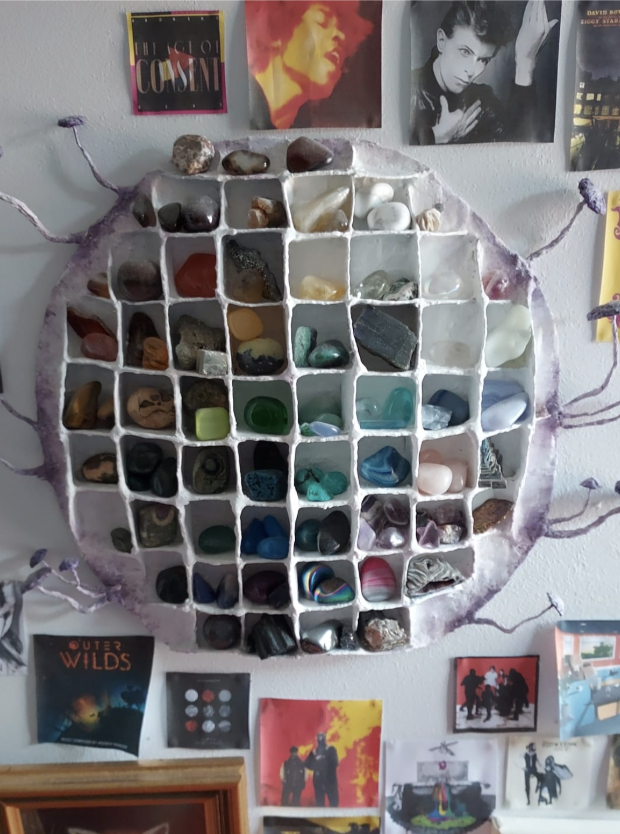
Hans Buetow:You know? I'm not gonna not gonna judge. Violet says, I used to pick up sequins up off the pavement and keep them in a little box. When I was maybe five, my mom took me, definitely a magpie, into a crystal shop, one of those hippie shops that leave you smelling of incense for hours after, and I bought a little tumbled piece of rose quartz. Since then, at every museum gift shop, market stall, and tourist village, I have an eye out for a place I can buy a little crystal, usually one per visit.
Hans Buetow:I have over a 100 now in display shelf I made myself from cardboard and papier mache.
Georgia Hampton:Woah. Jed,
Mike Rugnetta:looking forward to your email about that. Yeah.
Hans Buetow:I'll see. There have been some crystals that I knew I wanted but hadn't found yet, says Violet. And I would occasionally look online or on eBay where they could be found in multitudes for cheaper than the shipping cost. But when I looked at the images online, I realized it would feel profoundly wrong to buy them this way. First, most of my crystals are only an inch or so big.
Hans Buetow:It would feel kinda silly having just one shipped across the country for me. But also the joy of buying a crystal is so much more than the item itself. Ding. Ding. Ding.
Hans Buetow:Ding. Mhmm. Each one is a little souvenir of the place I bought it from. I could recall the memory of where I got each one from over fifteen years, where I could spend ages pouring over little boxes of gems, making sure to find the one that looks the most interesting and unique even especially in parentheses if it's a little uglier and cheaper than the pretty ones sit next to it. I like to pick the one that speaks to me.
Hans Buetow:In most of the online shops you don't even see an image of the crystal you're buying. Who would bother taking display photos of every single tiny rock they sell? Anyway, tldr, I like collecting pretty rocks and buying online would suck the fun out of it entirely. I've attacked a picture of my crystal display. If you'd like to see it and you do wanna see it, we'll put it in the show notes.
Mike Rugnetta:It's pretty sick.
Jason Oberholtzer:It's Violet. Violet,
Georgia Hampton:I I do the exact same thing. I have a million crystals. I love buying them. I would only buy them in person.
Hans Buetow:Cooper Mulderry follows up with an email. The friction touched upon in the Disney pin segment reminds me of a
Hans Buetow:lot of the
Hans Buetow:friction lost in online gaming. Yes. Many games in the early two thousands had split screen and local area network LAN capabilities that encourage people to be all in the same room and play together. I would often throw LAN parties for my birthday as a teen, landing Halo Star Wars Battlefront and Starcraft. We'd all be in the same room.
Hans Buetow:We'd have to organize, connect our routers, network cables, and Xboxes, and we'd each make a profile on each system. Now in order to land on modern consoles, each player must make a Microsoft account, give their email, and set up a gamer tag to do so. This seems to me to be trying to prevent local area networks and in person gaming. Many multiplayer games don't even offer split screen functionality. I've always thought this has contributed to the perceived and sometimes actual toxicity and aggressive nature of many online gaming circles.
Hans Buetow:We are isolated from the people we play with. There is no social cost for being a real jerk. In the same way that Rose and Maggie could have just bought the Disney trash can pin online and skipped human interaction in the trade meets, I have found that in person gaming creates a more welcoming and friendly environment as opposed to online matchmaking. Hell yeah. I have so many things to say about this.
Mike Rugnetta:I I think Cooper is a thousand percent right. Yes. Yeah. It's exactly what JP wrote about sort of. Right?
Mike Rugnetta:They Yeah. Video game developers who want to maximize their economics will do not want two people playing one game. They want two people playing two games.
Hans Buetow:Yep. I think there's one group that makes some exceptions to this, and that's Nintendo.
Mike Rugnetta:100%. Mario Kart. Splatoon, actually, you can do you do play online and does have a massive online player base.
Hans Buetow:Nintendo sports, like, there are a couple of things that are intended, and that's all kinetic. So you're supposed to move. You're supposed to be in the room with somebody while you do it. So this does live in some small places. But, yeah, it all goes back to Love Island.
Jason Oberholtzer:Oh, no. It does not. It says here we need to go to commercials. So Yeah. See you guys on the other side of this break.
Mike Rugnetta:Okay, Hans. Get started. Love Island. Lay it on us. Actually,
Hans Buetow:Love Island should be called Accountability Island.
Mike Rugnetta:Okay. We're back. Georgia, what did you make our listeners do? How dare you?
Hans Buetow:Well, I somehow created the most discourse I think we've ever
Mike Rugnetta:created about anything strangest place
Mike Rugnetta:on the Internet. Yeah.
Georgia Hampton:Yeah. So this was member content, wasn't it?
Jason Oberholtzer:Yes. This was member content.
Georgia Hampton:So another plug for member content. We had an a whole episode where we discussed the event planning app, Partifle. And during that conversation, I had an evil idea, which is that if anyone wanted to submit a comment about what we were talking about, they had to do so through an event I created on Partifle.
Mike Rugnetta:For Hans' friend, Tinky Tiny.
Hans Buetow:Who knows how to play lefties, righties?
Hans Buetow:If you
Hans Buetow:were a member, you would know what that means.
Mike Rugnetta:No. You wouldn't. You would absolutely know.
Hans Buetow:In fact, none of us know what that means.
Georgia Hampton:But I created an event called Tinky Tiny's b day bash on the July 4, because Tinky Tiny is nothing if not a patriot. 38 people RSVP'd that they were going to this party. I got seven maybes and an unknown number of nos. It would not show me that. And a very vibrant comment community of, by my last check, 43 messages in this little event, many of which were yelling at me and other people doing a fabulous play pretend of telling me why they couldn't come.
Georgia Hampton:My favorite of which was that someone said they had to drive their grand aunt to her jujitsu class, which then prompted someone else to say that they were teaching jujitsu to a rival of the Grand Anne and also couldn't. I
Mike Rugnetta:love the, the stories in the Never Post extended universe. Yes.
Hans Buetow:So good. I am nothing if not someone encouraging lore creation around this community we've built.
Georgia Hampton:Now when we talked about Partifull, we were discussing it as kind of this unfortunate sequel to something like Facebook events. So to start us off, Angus Dingwall, who was going
Mike Rugnetta:Thank you, Angus.
Georgia Hampton:Said, this is the problem of modern app creation. All focus on UI, no real thought about UX. Ends up with a thing that feels like it was made by someone who has never been to a party or even met another human being.
Hans Buetow:Can someone explain to me the difference between UI and UX?
Mike Rugnetta:UI is like the stuff that you look at, and UX is how it feels to use that stuff.
Georgia Hampton:As Annabelle August, who was also going to the event.
Mike Rugnetta:Thank you, Annabelle.
Georgia Hampton:As they also commented, there's this, like, built in personality to Partifle through the way the app is designed. That I'm sure is meant to create this kind of like, what's up party goer? Like, you're going to an awesome event. But it feels very forced
Jason Oberholtzer:Mhmm.
Georgia Hampton:And weird. Next, we have Morg, who also went to Tinky Tiny's B Day Bash.
Mike Rugnetta:Thanks for coming, Morg.
Georgia Hampton:Who writes, the method used to advertise an event someone's hosting can also be used as a way to abdicate responsibility and not be direct about who they don't want there. Like using a Facebook event page and inviting people they know won't see it because they don't use Facebook anymore. To have the out of, well, I invited you, didn't you see it? Versus being direct with them. People want the plausible deniability.
Mike Rugnetta:The secret thing of, like, I don't actually want to have this event, but I feel like I have to. Or, like, I wanna have this event for a small number of people, but I can't just invite those people.
Georgia Hampton:I think that's the
Hans Buetow:true thing.
Georgia Hampton:Because I was
Hans Buetow:about to be like, you're being very generous.
Georgia Hampton:And that I think it's a sort of, you know, political nightmare of friends.
Jason Oberholtzer:I don't live my life like you people do.
Mike Rugnetta:Yeah. I don't that's yeah. I just wouldn't do it. Yeah. So sorry that
Jason Oberholtzer:it feels like this to you, though.
Mike Rugnetta:Oh, the next one is from James Bolanbaugh. That's my friend James.
Georgia Hampton:James has this to say, who was also going to Tinky Tiny's birthday party.
Mike Rugnetta:He better. Of course. Thank
Georgia Hampton:James writes, only Partifull RSVP of my life. I'm honored. It's an honor, James. I never opened their texts because they look exactly like fishing. Unknown number, short link, vague urgency.
Jason Oberholtzer:Yes.
Georgia Hampton:Congrats to Party Palooza for making party invites indistinguishable from a scam.
Hans Buetow:Hard yes. Hard yes. All invites all invites software and apps and invites are this. I know I can't open any
Mike Rugnetta:of them. Too many emojis and shapes. Cool.
Georgia Hampton:Yeah. Again, it's the it's the personality. It's the personality. It feels fake. It feels like a threat.
Georgia Hampton:Moving on, we have another message from Cooper Mulderry.
Jason Oberholtzer:Second time in the bag.
Georgia Hampton:Cooper's back, who also went to the birthday bash.
Mike Rugnetta:Good. Thanks for coming.
Georgia Hampton:I'm surprised you all missed the most wild feature of this app, the crush feature, where you can say you have a crush on another party goer to an event you RSVP'd to. Wow. And it will only tell them if they crush on you too.
Hans Buetow:Oh, god.
Mike Rugnetta:That is psychotic.
Hans Buetow:That's so
Georgia Hampton:bleak. I swear, it's like everything I think we've we're slowly coming to a conclusion that everything is both gambling and dating apps.
Hans Buetow:Right. Which is itself a form
Hans Buetow:of gambling.
Georgia Hampton:Yeah. It's just gambling again. Yeah. It's just roulette.
Jason Oberholtzer:And yet Gen z has no money and does not have sex.
Hans Buetow:Yeah. And we wonder why.
Georgia Hampton:This is, like, a Machiavellian, like, evil evil thing. I have never known anyone to at least admit that they've used this, but I don't think anyone I know has ever used this feature.
Hans Buetow:It is
Georgia Hampton:so unimaginable
Mike Rugnetta:to I'm gonna go I'm gonna go RSVP and crush on James.
Georgia Hampton:I also wanted to say that many people who commented on Tinky Tiny's b day bash also offered other event planning softwares or apps to use. So I've amassed a collection of them. The Knot. We have using a separate Discord server for planning parties within your friend group. Wow.
Georgia Hampton:We have evite.com, which does not have an app, only exists as a website. We have Meetup. We have just the the desire to bring back forums.
Hans Buetow:Sure. Like Socrates?
Hans Buetow:Yeah. Yes. The forum. The salon.
Jason Oberholtzer:Who among you will hang out with me?
Georgia Hampton:Yes. And then finally, we have Paperless Post.
Jason Oberholtzer:Well, what a treat. I hope the Tinky Tiny feels properly feted.
Mike Rugnetta:Yeah. I do too. Alright. Next up, we got some mail in about the Brain Rot segment. In this segment, I talked with academic Emily Owens about brain rot as a complex of media that exists online in order to kind of defeat the pressures of productivity amongst teenagers in particular is who Emily studied, but potentially everybody.
Mike Rugnetta:Sort of an answer to the Internet and all of the media on its insistence that you always be either consumer or laborer, and brain rot as a way of saying, like, no. You could just be a an idiot. That's fine.
Jason Oberholtzer:Sounds
Hans Buetow:There's a weird third option.
Mike Rugnetta:Be a big old dummy. Yeah. The secret the secret third option is is head empty. Yeah.
Jason Oberholtzer:And I think this email in particular is downstream of a couple subsequent conversations on other mailbags. One of which I think we were responding to someone asking if they're, like, crossword habit was brain rot or anything. Yeah. We got, like, deep into the weeds of, you're allowed to just, like
Hans Buetow:You can enjoy the task that isn't productive.
Jason Oberholtzer:Yeah. Exactly. You're allowed to.
Mike Rugnetta:But a crossword is productive, so no.
Jason Oberholtzer:Sorry. Anyway That's
Hans Buetow:a laborer. It depends on if it supports your streak or not. Then is
Mike Rugnetta:it labor or not? This is what Ross Lewallen says. Right? Ross says, how do you never post? What habits or techniques do you use that go against or thwart the design of the platform?
Mike Rugnetta:If you don't know, I regret to inform you that LinkedIn games are actually pretty good.
Hans Buetow:Oh, Georgia's waving her hands and backing away from
Hans Buetow:the microphone. To believe this. I refuse to believe this.
Mike Rugnetta:Ross says I play them alongside New York Times games most evenings. Something I don't like about them, however, is that they automatically track your streaks, daily wins in a row Look at that. In a way that annoys me. I don't like the influence keeping a streak alive has on what should be a fun casual thing for me. So that's you are choosing to not be laborer.
Mike Rugnetta:Choosing to be idiot. So for most of the games, I intentionally play them all the way up until the last click or tap, and then I stop. Oh. I get to know that I completed the puzzle,
Georgia Hampton:The, like, mental fortitude to be like
Caller:Yeah.
Georgia Hampton:I know.
Jason Oberholtzer:You're the strongest person I have ever heard.
Georgia Hampton:Oh, gosh. It's so admirable. I I love this. Oh my god.
Mike Rugnetta:So, you know, it makes sense, right, that this would happen on LinkedIn. This would be how LinkedIn does it. A very sort of, like, productivity oriented in a lot of ways social network. So Ross is taking an action to thwart this insistence on productivity and wants to know if there are similar actions that we all take in our lives.
Hans Buetow:Going to the library, does that count? Like, going to get going to get DVDs of the library, listening to records, does all that stuff. Like, stuff that doesn't tick something on a counter.
Georgia Hampton:I think it has to be something where you are using an interface, but denying a component of it.
Mike Rugnetta:Yeah. The one that I can think of is that I don't have notifications turned on for anything. That's reasonable.
Hans Buetow:Is something like using Facebook only for the marketplace fit into this, or is that
Mike Rugnetta:too mainstream? No. Because Facebook knows that you're doing that, and they That's such a they like it. And they're using that. Maybe
Hans Buetow:I can get five years ago when it was just a sub side thing.
Georgia Hampton:But now
Hans Buetow:it's not.
Georgia Hampton:It's also like, there's a reason they don't have just an app for the marketplace, which they should have. Because so many people, myself included, only have Facebook still for marketplace.
Hans Buetow:Yep.
Georgia Hampton:But they want you to have to go to Facebook.
Mike Rugnetta:They they want you to log in so they can read the contents of your clipboard.
Georgia Hampton:Yep. I
Georgia Hampton:don't know. Maybe we gotta think about this a bit more.
Mike Rugnetta:Ross, good question.
Hans Buetow:Great question.
Georgia Hampton:Alright. Up next, we have two voicemails about my episode regarding the perfect vehicle ever to be made. The 1993 Renault Twingo, which if you are unfamiliar or you have somehow forgotten, is a funny little guy of a car that has very round headlights, a little smile on its bumper, and is just sort of the perfect little friend of a car. The first comes from Erin, who called in about another fabulous dorky little car that came to the culture through a notably non car guy method.
Erin:I called to give a shout out to the I know about the Yugo because that is heavily featured in the movie Nick and Nora's Infinite Playlist, the True Hats now was a very important piece of teen media in the, late aughts. A shout out to the Yugo.
Georgia Hampton:Erin, I'm so glad you mentioned Nick and Nora's Infinite playlist. A beloved piece of culture for me. Completely independent of this car guy lifestyle by virtue of the fact that the Yugo, a car that is famous for not really being a great car.
Mike Rugnetta:Manufactured in Yugoslavia, and I believe up up until the late eighties.
Mike Rugnetta:Mhmm. So
Georgia Hampton:yeah. Yeah. A car that I don't think was especially reliable is very cute, very boxy, looks like a toy, is very much taking a page from the the Twingo's visual book. Fun cars exist everywhere. You do not have to rely on the car guy to find a car that you think is cute and fun.
Mike Rugnetta:Also, a quick fact check of myself. The Yugo was produced until
Georgia Hampton:2008. Speaking of sweet little cars, Penalty sent in a voicemail about my favorite car of all time, which is the Mini Cooper, a car that I am desperately trying to find an excuse to buy one of these days when I have the funds, and I don't mind the fact that you have to go to a mini dealer to get everything fixed.
Pennelli:So there was a car forum online called North American Motoring for many enthusiasts that I spent a bunch of time on before I ever got a mini. Learned a bunch of stuff about them. People were super welcoming. Happy to educate you about them, including things like, here, these are the issues to look out for or just like, hey. Look at my mini.
Pennelli:This is how I've modded it. Doesn't it look cool? And everyone's like, yeah. It looks super cool. I don't know how I could possibly have found
Pennelli:a comedian like that, IRL.
Pennelli:Especially because, like, there's a gender thing to IRL car culture that is inescapable when you are a small woman.
Georgia Hampton:A gender thing in car culture? It's more likely than you think. I'm just so happy to hear this. I love minis. I'm not surprised at all that the online mini community is wonderful and sweet.
Georgia Hampton:And it's just nice to hear about other corners of the Internet where this is happening.
Jason Oberholtzer:I guess I never really properly considered how hard it would be to find other people who like your weird little car if you just have to, like, see them on the road.
Georgia Hampton:Oh, yeah.
Georgia Hampton:It's you.
Jason Oberholtzer:Alright. Next up, we have a section just called cool things to check out.
Hans Buetow:That's the
Hans Buetow:theme song.
Jason Oberholtzer:Guess I don't need to compose anything.
Mike Rugnetta:Easy. Is that also that also
Hans Buetow:Okay. Actually,
Mike Rugnetta:no. Oh, shit. Okay.
Mike Rugnetta:Hanzo, just let
Georgia Hampton:us thousand dollars. Okay.
Caller:I've just been listening, catching up on some episodes. And I know it's quite frequently. There's a discussion on, man, current mobile phones are really boring. And I agree on this. I wanted to point out a resource.
Caller:It is called the mobile phone museum. Literally mobile phone museum dot com. It just is a catalog of a bunch of models of phones.
Caller:They're Oh, yeah.
Caller:This phones is as determined by the staff who work there. They have it organized by brand. They have it organized by decade, by country that they were
Jason Oberholtzer:Sure do.
Caller:Sold in. They have one called James Bond Phones. It's very fun. I like to draw some of the weird guy weird little guys on here. That's all.
Caller:I hope you have a great day.
Georgia Hampton:What collection are you guys looking at?
Hans Buetow:Because I'm looking at fashion.
Mike Rugnetta:I'm looking at the full catalog, and it's just Same. There are so many good phones.
Georgia Hampton:I instantly looked up my favorite phone I ever owned, which was the Pebble.
Jason Oberholtzer:There's I like these motorolas that have, like, the middle finger antenna in the middle.
Mike Rugnetta:Oh, yeah.
Hans Buetow:Yep. Well, this is this is a great resource.
Georgia Hampton:It's so wonderful.
Mike Rugnetta:Yeah. The Japanese with the chick lit buttons.
Georgia Hampton:Oh my god. Cool.
Jason Oberholtzer:Yeah. This rules.
Mike Rugnetta:I guess I'll just go back to using my perfectly smooth ingot of glass later. Fuck.
Georgia Hampton:Thank you to the person who sent this in. You did not include your name, but thank you so much for this. This is Imagine if technology
Mike Rugnetta:in any way acknowledged the human body.
Georgia Hampton:Just imagine. Literally. If it in any way Colors. Acknowledged
Jason Oberholtzer:Mike is so mad right now. Next cool thing to check out comes from Timothy Banas, who sends us their website, solar.lowtechmagazine.com. And says, Low Tech Magazine is an excellent little publication mostly headed by Chris De Decker about technological solutions to climate change looking to the past for inspiration. But it's not just what you would think. First, the energy is entirely solar powered It has been for a couple years now.
Mike Rugnetta:And this The subhead on the website is, this is a solar powered website, which means it sometimes goes offline. Yeah. Some go away.
Jason Oberholtzer:Some go away. So based in Barcelona, Spain, it's on a very energy efficient little server attached to a mini photovoltaic in a window.
Hans Buetow:You have to watch it when it's sunny in Spain.
Jason Oberholtzer:Yes. The background of the entire website can slide between a cheery yellow or a gray indicating how charged the website is at that moment. As it says in multiple
Jason Oberholtzer:places cool.
Jason Oberholtzer:Sometimes, if it's too cloudy for too long, the website goes away.
Hans Buetow:I love this. Timothy, great find.
Georgia Hampton:Is so cool.
Mike Rugnetta:I love this. This is great. This is great. Also, like, great subject matter. Like an interesting an interesting idea, and also just like interesting stuff on this website.
Jason Oberholtzer:Next cool thing to check out comes from BluntFarce, who says, Ari, your conversation about the difference between the old joyously chaotic aesthetic of Myspace versus the enforced conformity of Facebook. Did you know that some brave souls have pretty much recreated Myspace at spacehay.com.
Hans Buetow:H e y, not h a y. Correct.
Jason Oberholtzer:It is messy and glorious. Recent figures have it about 2,000,000 users, including me. Well, including this online slash art aspect of me. Blunt farce.
Hans Buetow:Georgia just gasped.
Hans Buetow:You can go home again. Oh my god. It's like greeting an old friend. It looks exactly the same.
Mike Rugnetta:When I try to use it, it says Space Hay is not currently available in your region.
Georgia Hampton:Oh. Wait. I can.
Hans Buetow:Yeah. I can too.
Georgia Hampton:I can look at blogs.
Mike Rugnetta:Oh, yeah. It does say specifically, you're currently unable to offer space hay in New York. Yeah.
Hans Buetow:There you go.
Mike Rugnetta:This may be because of local requirements like age verification on social media, which I don't think we have.
Hans Buetow:I love space hay even more now.
Georgia Hampton:Yeah.
Hans Buetow:This is great.
Hans Buetow:Come on, Hans.
Hans Buetow:Yeah. Go Midwest. Let's
Jason Oberholtzer:go. Our
Jason Oberholtzer:next cool thing to check out comes from Thomas Zauner.
Hans Buetow:Good luck with this.
Jason Oberholtzer:I was born to do this. If I can't get this first take as an Oberholzer, I resign my name.
Georgia Hampton:That's so true, actually.
Jason Oberholtzer:Same is so true. Dear Never team, I am intrigued by one item in the call for submissions for the Never Post Olympiads. We asked people to talk about their favorite kitchen implements. Anyway, while he didn't participate in the Olympiad, he's very happy to share his favorite kitchen implement for our enjoyment. It is the Holy moly.
Jason Oberholtzer:Yeah.
Georgia Hampton:Irish in the
Mike Rugnetta:first give the name off. I'd give it back.
Jason Oberholtzer:Why did it
Jason Oberholtzer:broke so we it broke so
Jason Oberholtzer:quickly? Yeah. We got lost. Alright.
Jason Oberholtzer:Alright. Gonna take it again. Our first first first. Some
Georgia Hampton:are worse. Did provide a a helpful phonetic pronunciation below.
Jason Oberholtzer:Oh, if it's so helpful, why don't you do it?
Georgia Hampton:Alright. This sounds Hebrew a little bit.
Jason Oberholtzer:Hans? Before I tell you what the item is, listeners, you can do your own pronunciation. It is spelled Gusby.
Jason Oberholtzer:E I r s h
Jason Oberholtzer:a guys? I need to lock in. Focus. E I e r s c h a l e n s o l l b r u c h s t e l l e n v e r u r s a c h e r.
Mike Rugnetta:What is it?
Hans Buetow:Well, obviously.
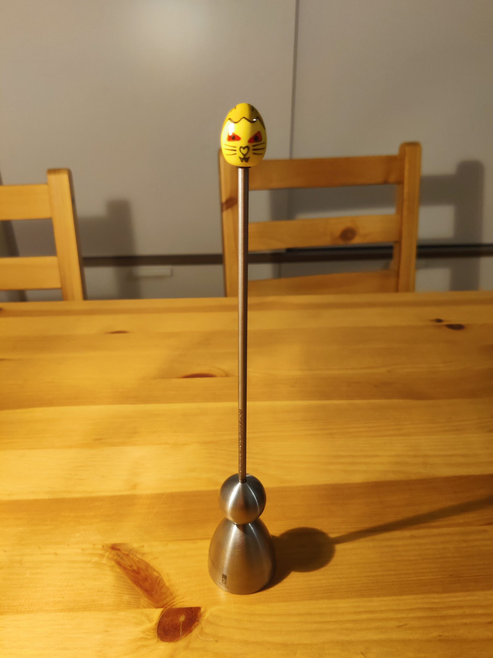
Jason Oberholtzer:It's a clack egg opener. You put it on top of your cooked egg in the egg cup. You then let a metal weight clack down onto the metal receptacle that is placed on top of the egg in der besten aller mochlichlen Welton. This breaks the eggshell in a perfect circle around the edge of the metal receptacle, allowing you to pull it off cleanly. You may thus enjoy a perfectly beheaded egg.
Georgia Hampton:Okay. Well, now I want one. Sort of an egg guillotine Yeah. In a way.
Mike Rugnetta:And finally
Jason Oberholtzer:And finally graffiti. It has come to this.
Mike Rugnetta:So it seems like we're we're both one and two word now.
Jason Oberholtzer:The year is 2026. We accept one word and two word graffiti.
Mike Rugnetta:Okay.
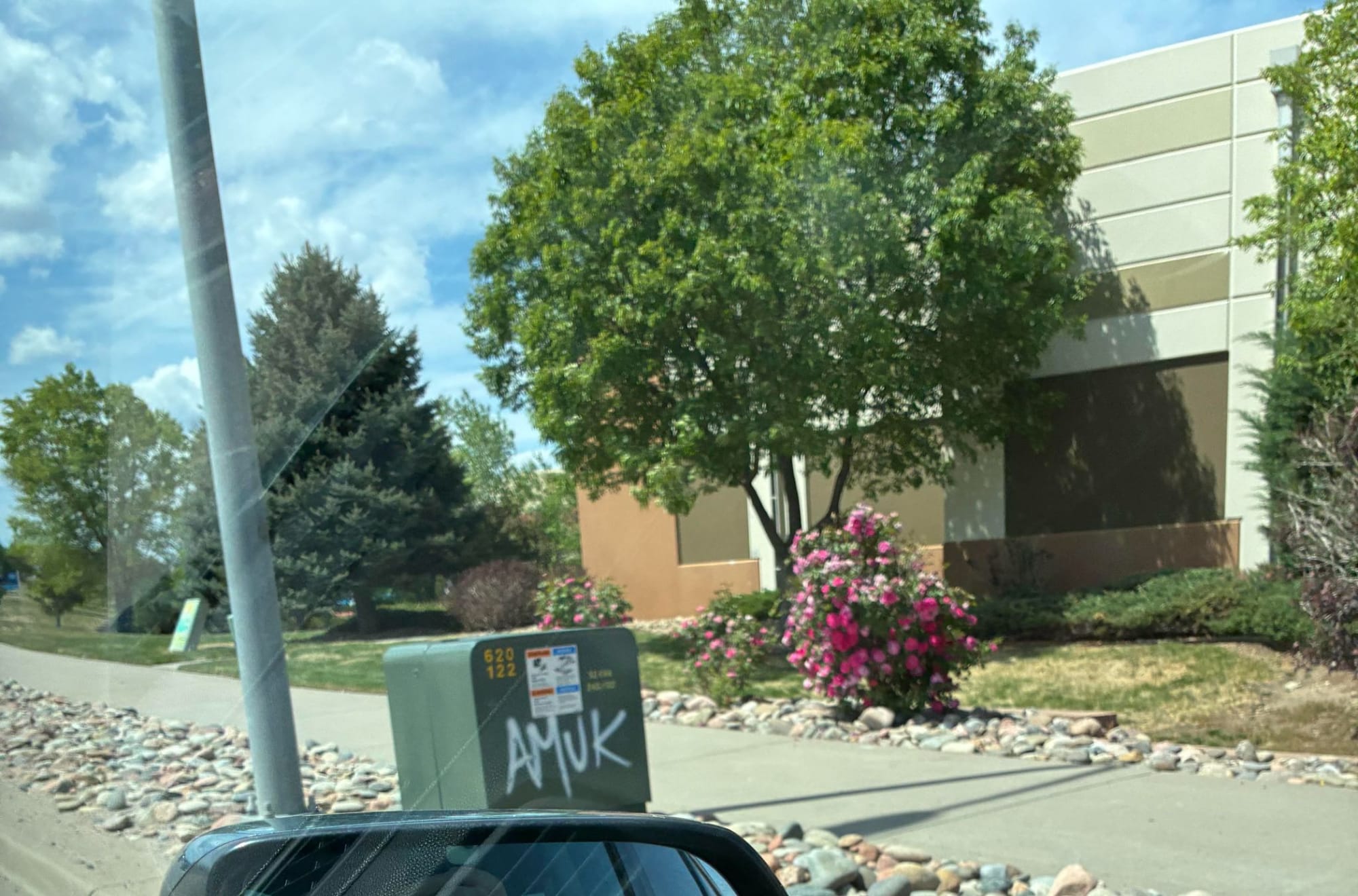
Jason Oberholtzer:We'll start with the one words. Matt Steclow sends us from Colorado, a piece of graffiti on the side of a little green transformer box on the side of the road, Amok.
Mike Rugnetta:I I love the word.
Jason Oberholtzer:M u
Mike Rugnetta:So good.
Jason Oberholtzer:K, Amok.
Mike Rugnetta:Isn't that also not how you spell Amok? Not
Jason Oberholtzer:at all.
Mike Rugnetta:Yeah. Not how you
Georgia Hampton:spell Amok. Not even
Mike Rugnetta:a little bit. Both are correct. Hey. A m o k is the preferred standard spelling in modern English.
Jason Oberholtzer:Lame.
Mike Rugnetta:Jesus. The word originated from the Malay word amok, a m u k, meaning to go on a killing spree.
Georgia Hampton:I've been using it wrong. Wait.
Mike Rugnetta:Hold on. No. I got fooled. I thought that I skipped the AI overview, but that maybe just be a this might just be a further down second AI overview. Oh, lord.
Mike Rugnetta:Okay. Don't believe what I just said.
Jason Oberholtzer:I never do. Next up, Georgia, will you tell the people what Megan Burdick has sent in?
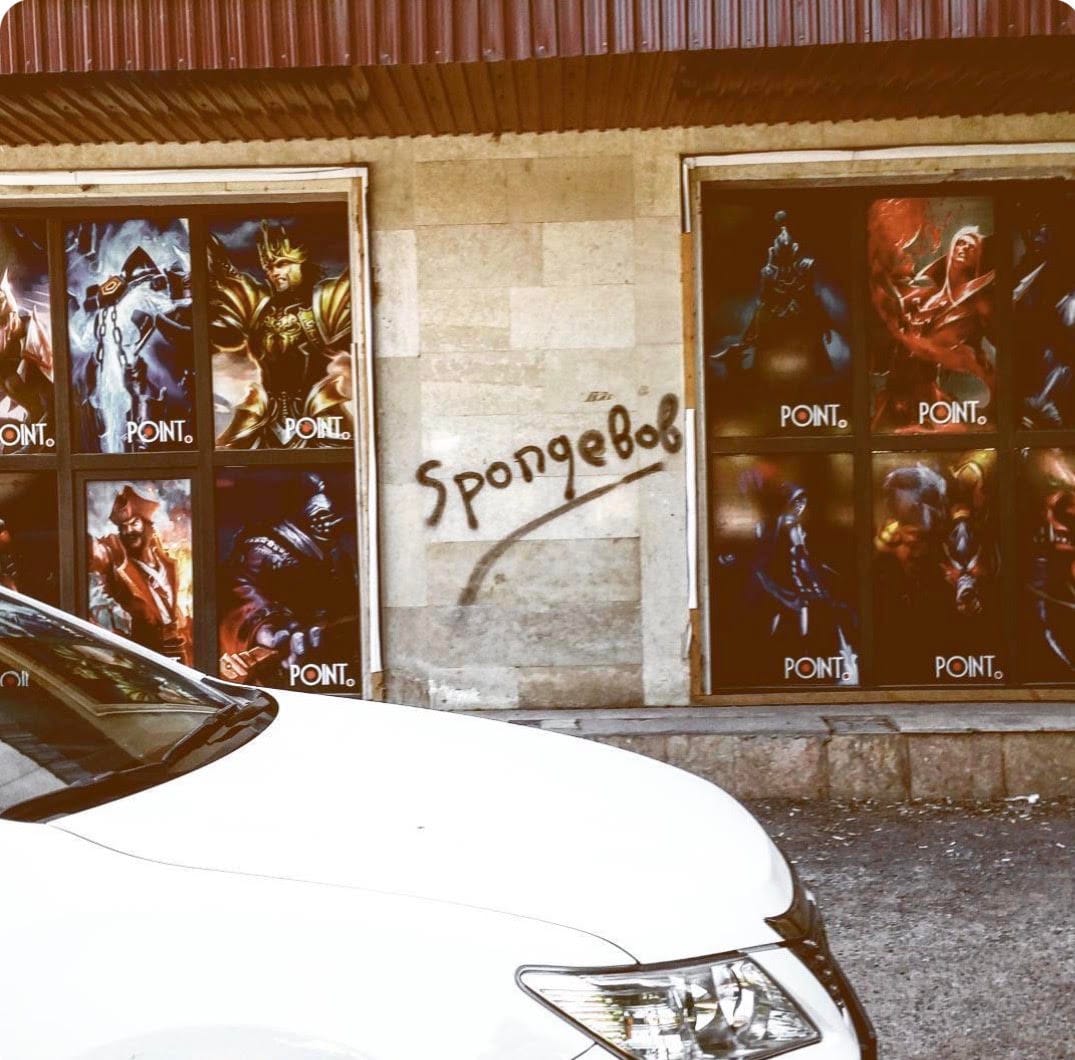
Georgia Hampton:Yes. On the side of an internet cafe in Schimkent, Kazakhstan.
Jason Oberholtzer:Good German.
Georgia Hampton:Forgive me if that is pronounced incorrectly. But it just says SpongeBob. And it's underlined.
Jason Oberholtzer:Hell, yeah. It does. Classic.
Georgia Hampton:As it's great.
Jason Oberholtzer:Hans, moving now to two word graffiti.
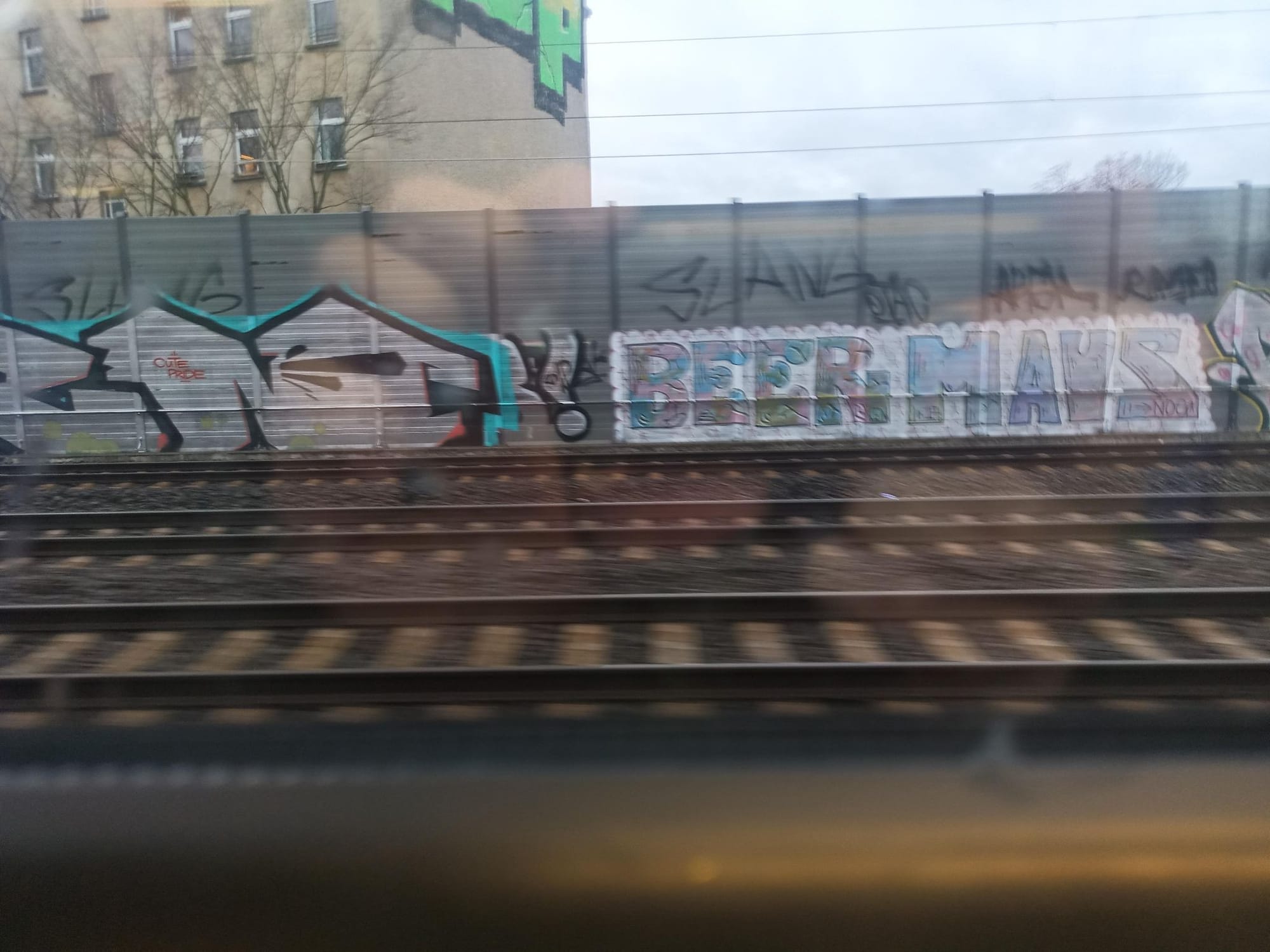
Hans Buetow:I think that's one word.
Jason Oberholtzer:Okay.
Hans Buetow:I think it's one word. It's not one word. It's two different words next to each other. That's two different artists tagging two different things. Okay.
Hans Buetow:It just happened to be linked by an outline. So it's a railroad tracks fence where it says beer, and next to it, maize, m a y s, and they're both outlined in white together.
Jason Oberholtzer:This is sent in by Sven Luke from Berlin.
Mike Rugnetta:Interesting. Interesting. The color scheme between the two is similar, but not. Yes.
Jason Oberholtzer:Beyond similar and be the same.
Mike Rugnetta:Distinct. Yeah. I don't know
Jason Oberholtzer:what it means.
Georgia Hampton:I know what this next one means.
Hans Buetow:The next one, unfortunately.
Jason Oberholtzer:Georgia is I'm exhausted. I thought they falling the turns,
Mike Rugnetta:I would get to do
Hans Buetow:special boy.
Jason Oberholtzer:My cut. And this is definitely two words of graffiti.
Mike Rugnetta:Two words. Yes. Okay. So chaikaholic sends in from Frankfurt, Germany, the side of a concrete wall where there is a bunch of graffiti, but in the middle of all of these tags, in bright red, all uppercase script, written in such a way that it seems like someone has done it quickly. Yes.
Mike Rugnetta:It's urgent. In a in a hurry. Yes. With urgency. Almost like emergency.
Mike Rugnetta:Yes. La boo boo cum shot. You know, La boo boo cum shot released a couple good records in the early two thousands. Oh
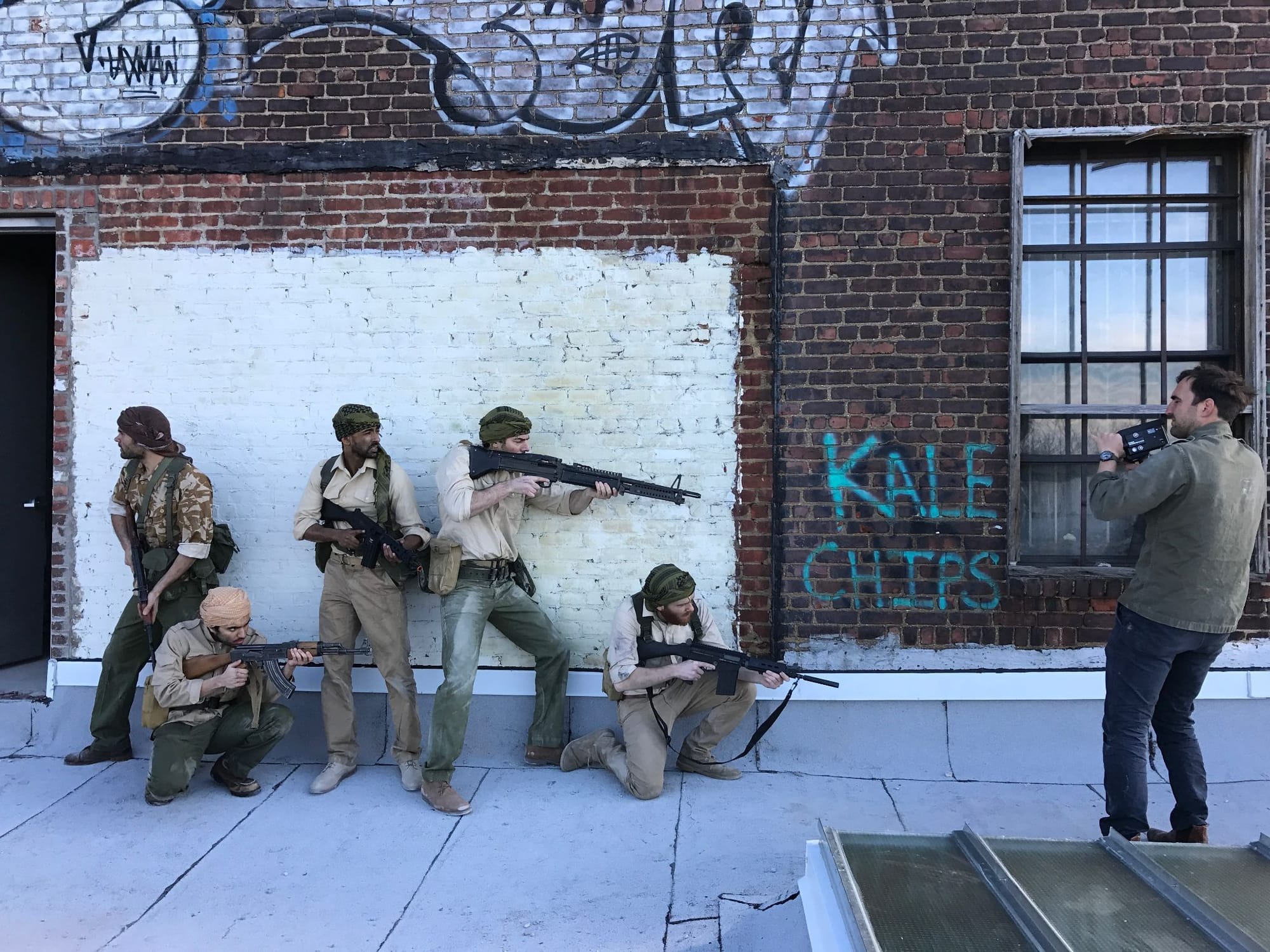
Jason Oberholtzer:my god. And one last submission from myself that I found in my photos from a number of years ago that I want you all to have to parse. I know what's going on. I desperately want you to try to figure out what's going on.
Georgia Hampton:This should
Hans Buetow:have been a why go, Jason.
Jason Oberholtzer:Yeah. This is this is why go worthy. Georgia, you want first crack?
Georgia Hampton:Yeah. Absolutely. So, in a totally normal situation that I'm looking at right now, we've got, five, well armed gentlemen with automatic weapons, as far as I can tell, sort of against a wall that has some graffiti on it, but they are beautifully framed in sort of a whitewashed section of that wall. And three of these men are pointing their guns to the right of the image off screen, I hope, because at the very edge of this photograph is another man with, like, a bolex? Like a
Mike Rugnetta:I was gonna say, I believe that's a 16 millimeter film camera.
Georgia Hampton:Yeah. A film camera, I think, were on a roof as well. But between these five guys with guns and this other guy facing them with a video camera of some kind, written in teal, all capital letters, script, kale chips.
Jason Oberholtzer:Kale chips.
Mike Rugnetta:The favorite snack of all brave Mujahideen fighters.
Georgia Hampton:Well, this is during the Kale Chips war Yes. If you recall.
Jason Oberholtzer:This is an old pal of mine, Tom Leverett, filming for a movie that he was making on a Brooklyn rooftop. And this was supposed to be set in like Tunisia or something, and he is doing like brick building to brick building combat footage with his like 16 millimeter camera. And the only thing that belies that you are not in Tunisia, but instead on a rooftop in Brooklyn is kale chips graffiti.
Mike Rugnetta:Also, I think all of these guys are wearing Clarks.
Jason Oberholtzer:So there are two anachronistic things.
Mike Rugnetta:Okay. Finally. Finally. An important piece of information.
Jason Oberholtzer:Maybe the most important piece
Mike Rugnetta:of information. Important piece of information in this mailbag.
Jason Oberholtzer:Yes.
Georgia Hampton:Definitely.
Mike Rugnetta:This we should maybe just produce like, release this as its own post so that everybody knows.
Georgia Hampton:Yeah.
Mike Rugnetta:Azalea Dring writes in and says, hey, never post. I just listened to the most recent Mailbag, number 12, and I have to stop to give you the true lowdown on Garfies. Absolutely. Absolutely. It also offers an important correction.
Mike Rugnetta:Garfys pronouns are she, her, not he, him. So sorry, Garfys.
Jason Oberholtzer:Now before we go on, if this is your first time hearing about Garfies, and I hope for you it isn't, someone has to tell you what Garfies are.
Mike Rugnetta:Imagine a drawing of Garfield with big old titties. Done. Here in Norm, so called Melbourne. I'll hold on. Sorry.
Mike Rugnetta:I'll say it right. So called Melbourne, Australia. Garfies is the local tag slash motif of a graffiti artist. There's a lot of the Garfies all over the city, and they're a beautiful sight to behold. Perhaps, not surprisingly, there is a lot of her in the areas where us queer folk live.
Mike Rugnetta:Oh. It's well known in the local trans communities that Garfie's is transfem. She's a meme icon of fat positive trans femininity ready to greet you with big fat tits at pedestrian crossings
Georgia Hampton:Yes.
Mike Rugnetta:On street lights, transformer boxes, street signs, or just about anywhere else she can rest her heavy weights. DIY estrogen has done her punk arse wonders.
Georgia Hampton:Oh my god.
Mike Rugnetta:I can confirm the canon of transfem Garfies through trustworthy sources, namely as a polyamorous trans woman in NARM. Two of my partners have both met the Garfies artist, of course, keeping the hero artist involved anonymous, though. Listeners, if you wanna get on the mailbag.
Georgia Hampton:Oh my god.
Mike Rugnetta:Azalea, thank you.
Hans Buetow:That's amazing.
Jason Oberholtzer:Thank you. Great info. I feel a great sense of closure.
Hans Buetow:Love that.
Mike Rugnetta:That is the mailbag we have for you. Thanks everybody for writing in. Thanks friends for joining. We will be back here in the main feed on or around whatever is one week from when this comes out.
Hans Buetow:Good luck to all
Georgia Hampton:of us.
Mike Rugnetta:Currently currently currently in flux. We'll see you in about a week. Okay. Bye.
Mike Rugnetta:Bye. Bye.